What Happens If a Tenant Can't Contact Their Landlord?
A tenant who can't get through rarely just tries again later and forgets about it. A call that rings out and goes nowhere reads as being ignored, and that assumption is what turns one missed call into a second call, a text, an email to a letting agent, or — if the issue was genuinely urgent — a complaint. The problem isn't that you were unreachable for five minutes; it's that nothing told the tenant what happens next.
Silence is the actual problem, not the missed call itself
A personal mobile has no way to soften an unanswered call. It either rings out to nothing or drops straight to a generic voicemail greeting, and either way the tenant is left guessing whether the call registered at all. That uncertainty is what drives repeat calling — not because the issue became more urgent, but because nothing confirmed it had been received.
What happens instead with a dedicated number
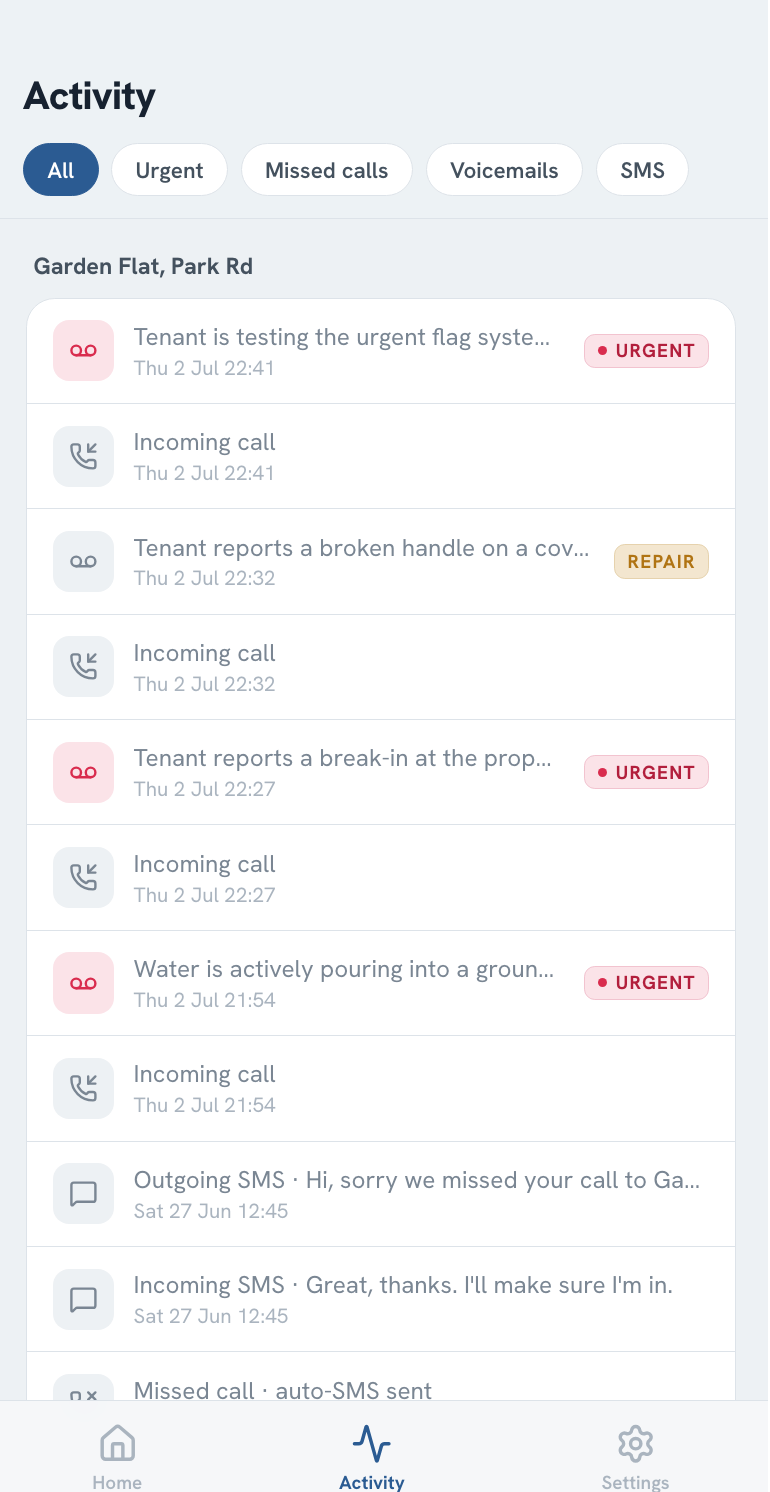
A dedicated landlord number closes that gap automatically, without requiring you to answer any faster:
- Voicemail transcription turns whatever the tenant said into text you can read in seconds, rather than a message you have to relisten to before you know if it's urgent
- Automatic text reply goes out the moment a call is missed, on a number that supports SMS and as long as your monthly text allowance isn't exhausted, so the tenant has confirmation their call was received before you've even seen it
- Call and message history in one place, so a callback starts from full context instead of a guess at who called and why
The tenant still doesn't get you on the phone immediately, but in ordinary use they get something better than silence — proof the call landed.
When it's a genuine emergency
Confirmation texts and transcripts handle the ordinary case, but they're not a substitute for urgent escalation. On plans that support it, a caller can mark their voicemail as urgent before they hang up, so it stands out from routine messages rather than sitting unread until you next check. That's a label on a message, not a live alert — it won't ring through or wake you up on its own — so it's worth telling tenants plainly that anything like a suspected gas leak, a break-in, or a similar emergency should go to 999 or the relevant emergency service first, not to a voicemail that might sit until morning.
Getting started
If missed calls are the specific problem you're trying to solve, our pricing page covers which tiers include urgent voicemail flagging, and the Get Started page is the quickest way to ask about setting this up for your own portfolio.
Frequently asked questions
What happens if a tenant calls and I don't answer?
The call goes to voicemail, which is automatically transcribed to text so you can read it in seconds rather than relisten to it. At the same time, the tenant gets an automatic text reply confirming their call was received (on a number that supports SMS, as long as your monthly text allowance isn't exhausted, since that reply is a text), so an unanswered call reads as acknowledged rather than ignored.
Will a tenant know their call was actually received?
Yes, in ordinary use — the automatic text reply that goes out on a missed call confirms receipt straight away, before you've had a chance to call back (it depends on your number supporting SMS, and it stops working, like any text, once your monthly text allowance is exhausted). On a personal mobile with no such reply, a tenant has no way to tell a missed call from one you're deliberately ignoring, which is often what pushes them to call again immediately or escalate to a second method like email.
What if a tenant has a genuine emergency and I don't answer in time?
On plans that support it, a caller can flag their voicemail as urgent before they hang up, so it's marked clearly rather than sitting unread alongside routine messages. That only tags the message rather than ringing through live or alerting you immediately, so for something like a suspected gas leak or a break-in, it's worth telling tenants upfront to call 999 or the relevant emergency service directly rather than relying on any phone system to make that judgement call for them.
Do I need to be available at all times to avoid missed calls becoming a problem?
No — the fix isn't answering every call, it's making sure an unanswered one still produces a transcript automatically, plus a confirmation text on a number that supports SMS, as long as your monthly text allowance isn't exhausted. That removes most of the anxiety on both sides without requiring you to be reachable around the clock.